The ICC International Maritime Bureau (IMB) reported 137 maritime piracy and armed robbery incidents globally in 2025, up from 116 in 2024 and 120 in 2023, highlighting a continued rise in maritime security threats. Of these incidents, guns were reported to have been used on 42 occasions in 2025, compared with 26 incidents in 2024.*
During security patrols in home waters or tactical operations, a critical element of maintaining crew safety is preserving and protecting the vessel’s mobility and power. The engine is a critical component of any vessel and therefore, failure of the engine is dangerous in any situation, particularly where crew safety is threatened by an impending attack.
Protective engine solutions can come in a variety of forms, with the biggest difference being between inboard and outboard engines, and whether they use a fixed armour solution or a removable cover option.

Outboard vs inboard engine protection
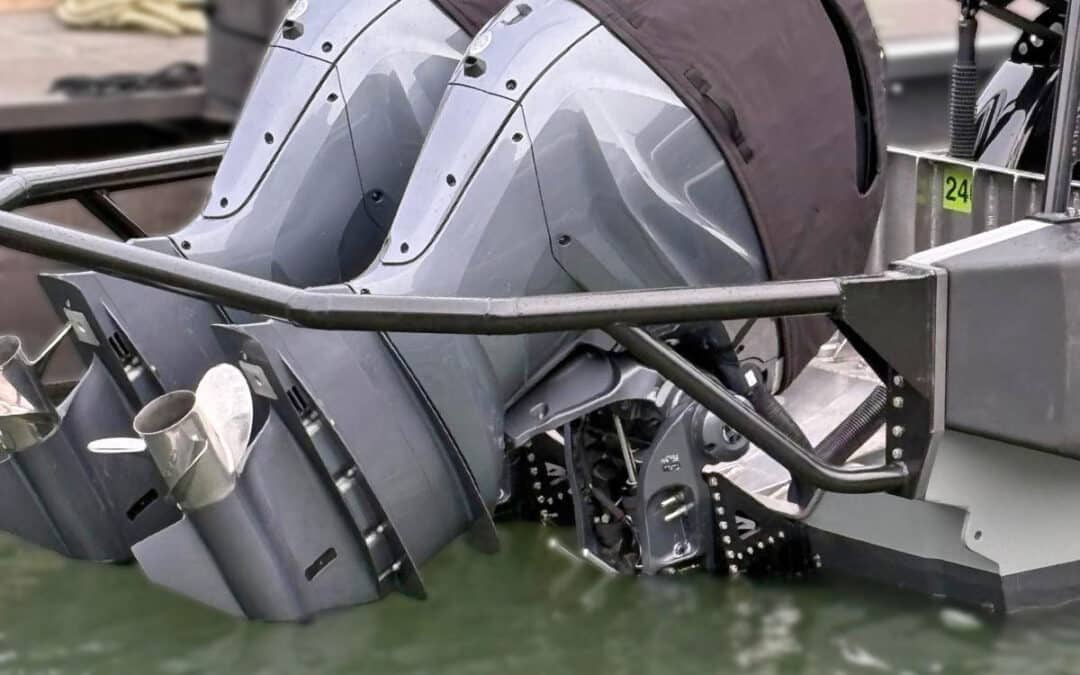
Outboard engines on fast patrol boats or tactical craft are completely exposed and therefore it is vital that they are suitably protected from potential small arms fire and fragmentation. The solution is ASL GRP’s innovative ballistic outboard covers which are completely removable and require no adjustments to the OEM cowling or engine. These covers can provide much needed time and in turn, help create distance – time that can be used for the crew to evade enemy fire, create distance from danger and enhance the capability to reach safer waters or shelter.
For vessels using inboard engines, a fixed, or rigid armour solution would likely be preference. This is where the design process can also be more complex. This protection is often requested after the boat has been built and is in working service and therefore, the space and nature of such protection will not have been planned in the design stage. If the boat is still in the design phase, this can be built into the plans. For rigid panelling, a higher level of protection can be achieved using ASL GRP’s Legion Polyethylene, or a hybrid material. Suitable fitments must also be considered, including allowing for an air gap, which is required for the protection panel delamination when a shot is taken.

Determining a protection level
Protection comes in many forms and depending on the situation, the ideal set up for individual vessels will vary. Where higher levels of protection are required – based on risk levels, geographic location and the nature of the activity/mission – the more layers of material will be needed in the protection design. Alternative material can also be offered, which, in turn, will impact the weight, thickness and rigidity of the solution designed for the vessel.
NIJ IIIA is the standard level of protection offered on ASL GRP’s ballistic outboard covers. This protects against typical handgun ammunition, such as a 9mm or .44 Magnum.
The next level of protection is NIJ III+ is, such as that of an AK47 round. For this requirement, ASL GRP include additional materials in the cover, which does increase rigidity and weight, as mentioned. Owing to this, the option of higher protection panelling on the outboard covers will lend itself better to particular outboard models.
Both the NIJIIIA and NIJIII+ options offer V50 up to 700m/s fragment velocity protection, which protects against tactical explosives, IEDs (improvised explosive devices) and ricochets from ammunition.
A bullet is a single projectile (which would likely be fired multiple times), whereas fragmentation is multiple articles. At ASL GRP, the standard engine cover has been designed to combat both threats, reinforced by specialist sector experience to develop the most suitable and protective solution for a client’s needs.
The benefits of removable protection
When vessels are being used for training purposes where there is no need to for protection, therefore the covers can be removed and the vessel can be used at its optimum, with no threat of damaging the engine or vessel. Another benefit of removable outboard covers is the significant noise reduction owing to the multi-layer material structure, combined with baffles in air intakes to create a complex path for the sound waves.
Our removable covers have no effect on the boat’s performance. Higher levels of protection would not be feasible to install as covers on a removable basis, due to the weight consequences.
When discussing the most suitable engine protection, the primary consideration should be around the likely threats a vessel or crew are likely to encounter – from the territories they are working in, the local professional authorities and their characteristics and/or whether the missions are likely to be defensive or offensive. From here, ASL GRP can support in making recommendations on suitable protection, in conjunction with weight, material and budget considerations. ASL GRP’s outboard covers do not effect the speed and agility of a vessel, but keeping the vessel at its lightest, will ensure running costs will be kept to a minimum.

Additional functional elements and technology
There is possibility for further personalisation with engine protection, whether it’s based on colour or finishes. IRR (Infra-Red Reflective) technology has also been an interesting development in ASL GRP’s ballistic engine protection. It can reduce a vessel’s heat signature and is a fundamental element to remaining undetected from night-vision. This enhances the protection of a crew, by drastically reducing the chances of being found and attacked, equalling greater operational freedom.
Aside from protecting the vessel’s engine, ASL GRP offer additional fragmentation protection solutions on board:
Steering Ram Protection Blankets:
A standalone fragmentation blanket that wraps around the steering ram and attaches back on itself using Velcro – easily removable for servicing, replacing or moving.
Wiring Loom and Hydraulic Steering Cable Protection:
Constructed from a blanket with a Velcro attachment at either end of the protective sleeve, it is manufactured with a cable tie stitched within the outer cover of the blanket, which is matt PVC.
Deployable Fragmentation Blankets:
Secured to the gunwale or inflatable tube of a boat using carabiners (snap-hooks). The flexible armour blanket can be deployable with a webbing handle which Velcro fastening, enabling the two blankets to be joined and act as a cover for vessel occupants.
ASL GRP offers end-to-end ballistic protection products and project management expertise, from initial concept and design through meticulous production and seamless integration for every project. We develop recommendations for our clients based on our extensive knowledge on the industry requirements. Having been in operation nearly 14 years, we are highly proficient in the evaluation of operational threats, material capability and designing custom products that meet client requirements, based on the situation analysis, including operational threats, available weight, space and allocated budget.
To find out more about our ballistic outboard covers or to discuss your vessel requirements, please visit www.aslgrp.com/ballistic-outboard-covers or contact (kp@aslgrp.com).